
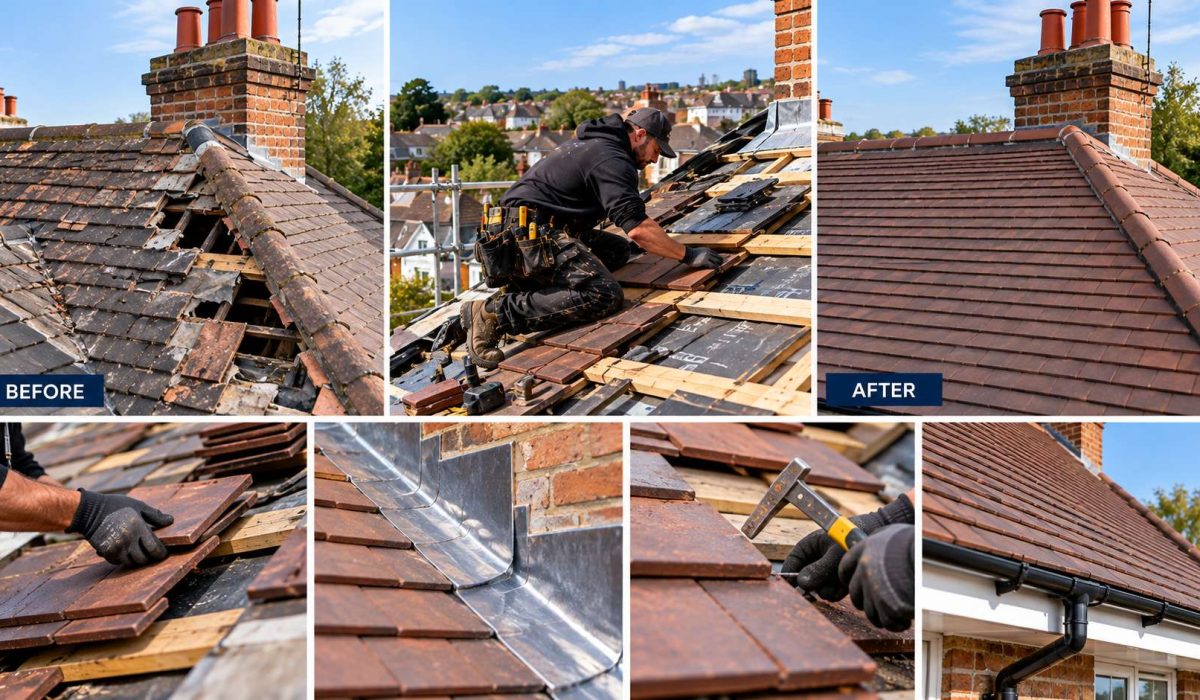
A leaking roof can quickly escalate from a minor nuisance to significant internal water damage, compromised insulation, and structural decay. For homeowners across Putney, Wimbledon, and South West London, knowing how to identify early warning signs can save thousands in emergency repair costs.
1. Visual Signs of Water Ingress
Water does not always travel straight down; it often trickles along roof trusses and rafters before dripping through ceiling plasterboard. Look out for:
- Damp patches or yellowish-brown water rings on ceilings and upper walls.
- Peeling wallpaper or bubbling paint near the junction between walls and ceilings.
- Musty odours in the attic or loft conversion space.
- Dark staining on exposed roof timbers or damp insulation batts.
2. Common Causes of Roof Leaks
The most frequent culprits in London residential properties include:
- Slipped or Broken Tiles/Slates: Heavy winds, thermal contraction, or corroded fixings cause slates to slip out of position.
- Deteriorated Lead Flashing: Lead valley gutters and chimney abutments expand and contract over decades, eventually forming hairline fractures.
- Blocked Valley Gutters: Accumulations of moss and autumn leaves can cause rainwater to back up underneath roof tiles.
3. What to Do While Awaiting Professional Repair
If you suspect active water ingress during heavy rainfall:
- Place buckets or containers beneath active drips to catch water.
- If ceiling plaster is bulging with trapped water, carefully pierce a small hole in the centre with a screwdriver to relieve weight and prevent ceiling collapse.
- Clear valuable possessions and furniture from the affected area.
- Contact a qualified local roofing specialist to perform a comprehensive roof inspection and safe repair.